
I’ve been using a Dell R510 with unRAID and Docker for almost three years. Here’s what’s happened so far.
My setup is in an almost continuous state of change – and that’s a good thing. By ripping things apart and building them back up in the newest flavor of the month I’m always learning about new technologies.
Between the end of my last post and now there were some notable changes:
- PfSesnse moved to a physical Netgate appliance – I didn’t want the internet going down while I was working on my server
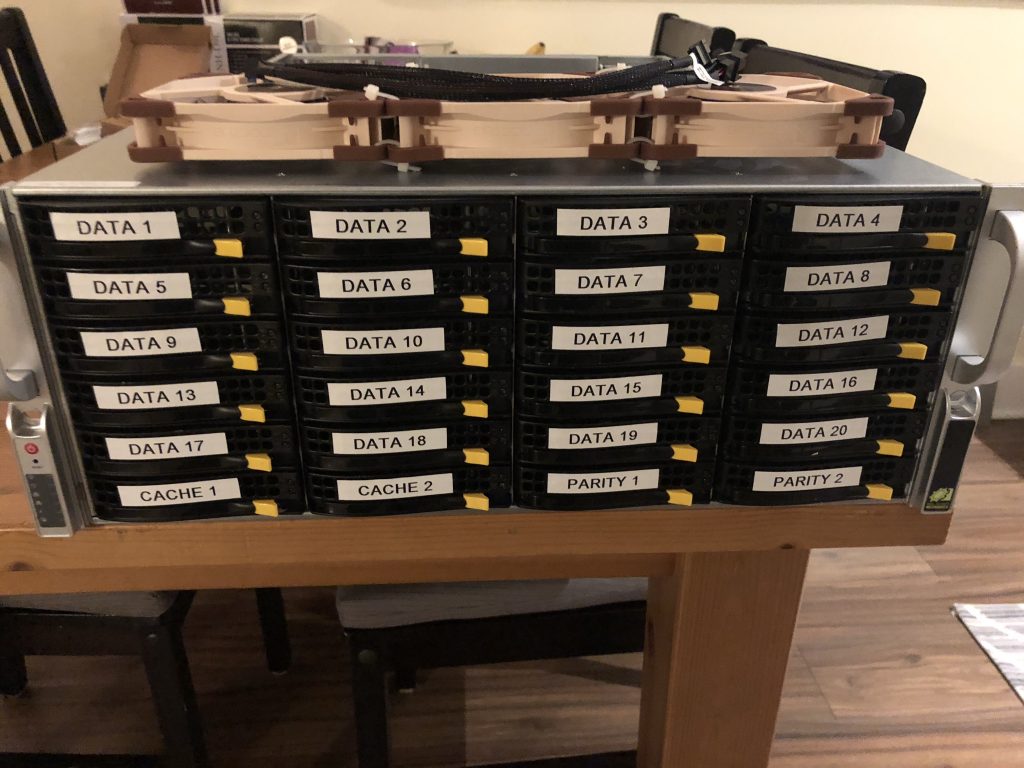
- I reached 24 4TBish drives in the unRAID server (by using an SA120 expansion shelf) and made the move to higher density 10TB drives – thanks WD EasyStores
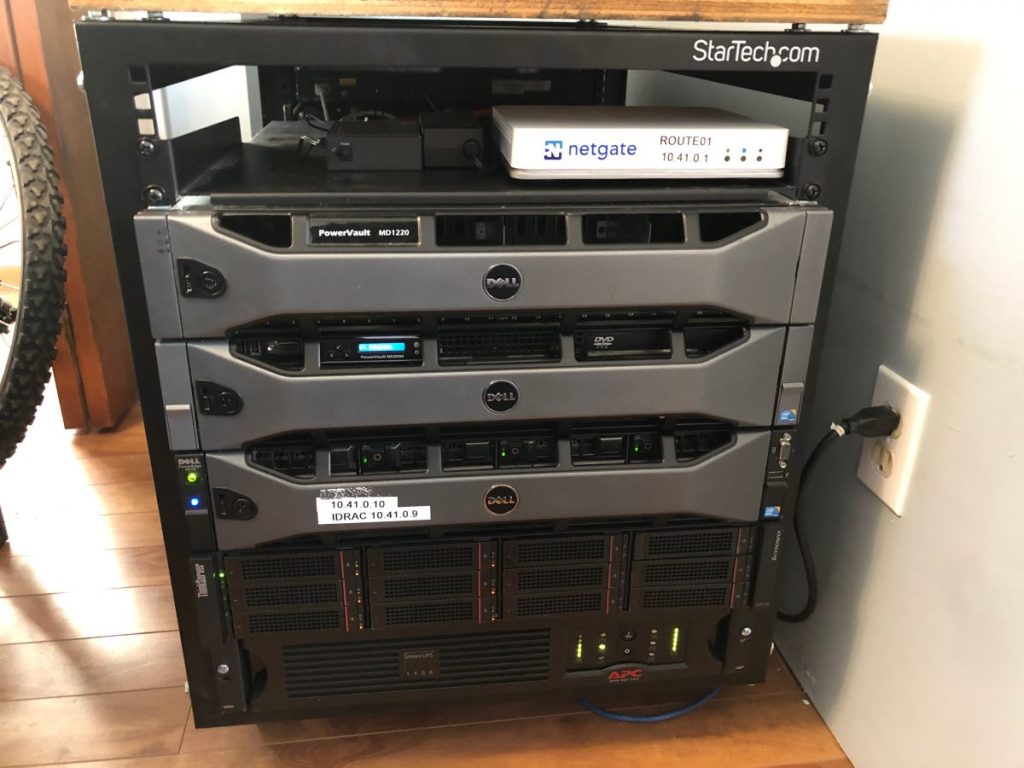
- The R710 server with Hyper-V was completely eliminated. I’ve moved a few times in the last few years and at one point had an initiative of going “single server” due to space constraints – the R510 is the only surviving device from my original setup.
- The SA120 and MD1220 expansion shelves were both sold off
- Networking got a lot better – I added an Aruba S2500-48P managed switch, implemented VLANs and installed multiple UniFi access points.
- I moved to a rackmount APC UPS with a network management card
So here it is – my home setup as of today:
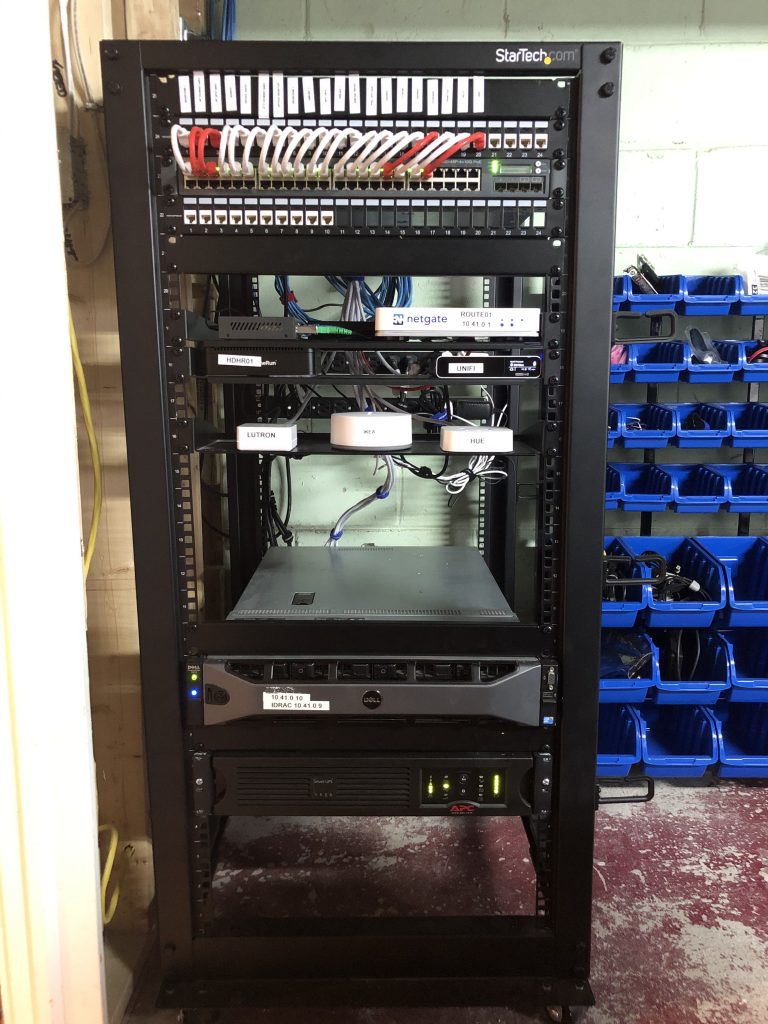
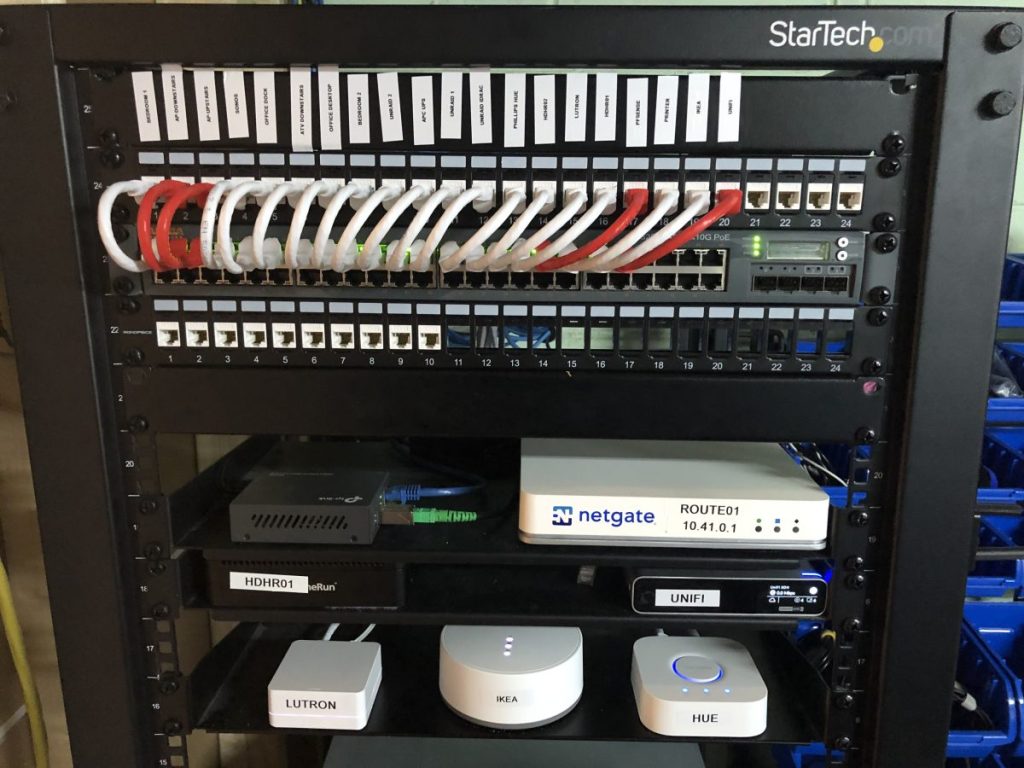
- Aruba S2500-48P Managed Switch with VLANs, 48 x 1Gb POE and 4 x 10Gb SFP+
- Media Converter (Bell Fibe 500/500 internet)
- Netgate SG-3100 PfSense Firewall
- HDHomeRun Extend
- Ubiquiti UniFi Cloud Key Gen2+
- Lutron, Ikea and Hue Smart Bridges
- R510 running unRAID (2 x X5650, 32GB Memory, 2 x 500GB SSD, 9 x 10TB HDD, 3 x 8TB HDD)
- APC SUA1000RM2U UPS with AP9630 management card
“Looks good” you might be thinking – and you’d be correct. This setup has served me well, it’s been largely hands off, reliable and has “Just Worked”.
Here’s what’s wrong:
- I’m almost out of storage space again – with every bay populated in the R510 unRAID is reporting out 96.1/104 TB used. At my current growth rate I’ve got about six months to figure this out.
- unRAID is slow – like, really slow. Parity is calculated in real-time but the drives aren’t striped. They’re simply XFS formatted devices consolidated to a single mountpoint – much like MergerFS. This wasn’t so much of an issue at the beginning but I notice now if there are multiple Plex streams on the go and I try to copy some files from my desktop to the server the whole thing just about comes crashing down. This needs to change – I need some high performance storage.
- The R510’s dual X5650s are showing their age – I routinely see the CPUs nearly maxed out during “prime time”. I think hardware transcoding might be the solution, but either way it’s time for more horsepower.
- While I don’t backup my downloaded media files (I can get them back – if some are missing, I don’t really care) I do care very much about my personal irreplaceable data. This means I have backups of my unRAID files, VMs and Docker Containers running as often as I can – in this case nightly. What I don’t like about unRAID is that you need to stop the VMs and containers to do a proper backup. I’ve got 20+ containers and a ton of Plex metadata so backups now take almost three hours a night to complete. This means my uptime is literally only 21 hours/day by default. This does happen during the middle of the night, but I think I can do better. Once or twice I’ve been watching something on Plex very late at night and had the stream cut out because backups were triggered and was super disappointed in my setup when it happened.
How am I going to solve it? Stay tuned for Part Three.

 Brown.id